 NestBit
Home Repair Cost Estimator: Know the Price Before You Start
Last updated:
To estimate a home repair, identify what failed, price the materials and any tools you lack, price the labor (handymen charge about $50 to $125 an hour in the US in 2026), add a 10 to 20% buffer for surprises, and compare the DIY total with a pro quote. NestBit does the first two steps from a photo: it diagnoses the problem and generates a cost breakdown for materials and tools, plus difficulty and time estimates, so you can make the DIY-or-hire decision with real numbers instead of guesses.
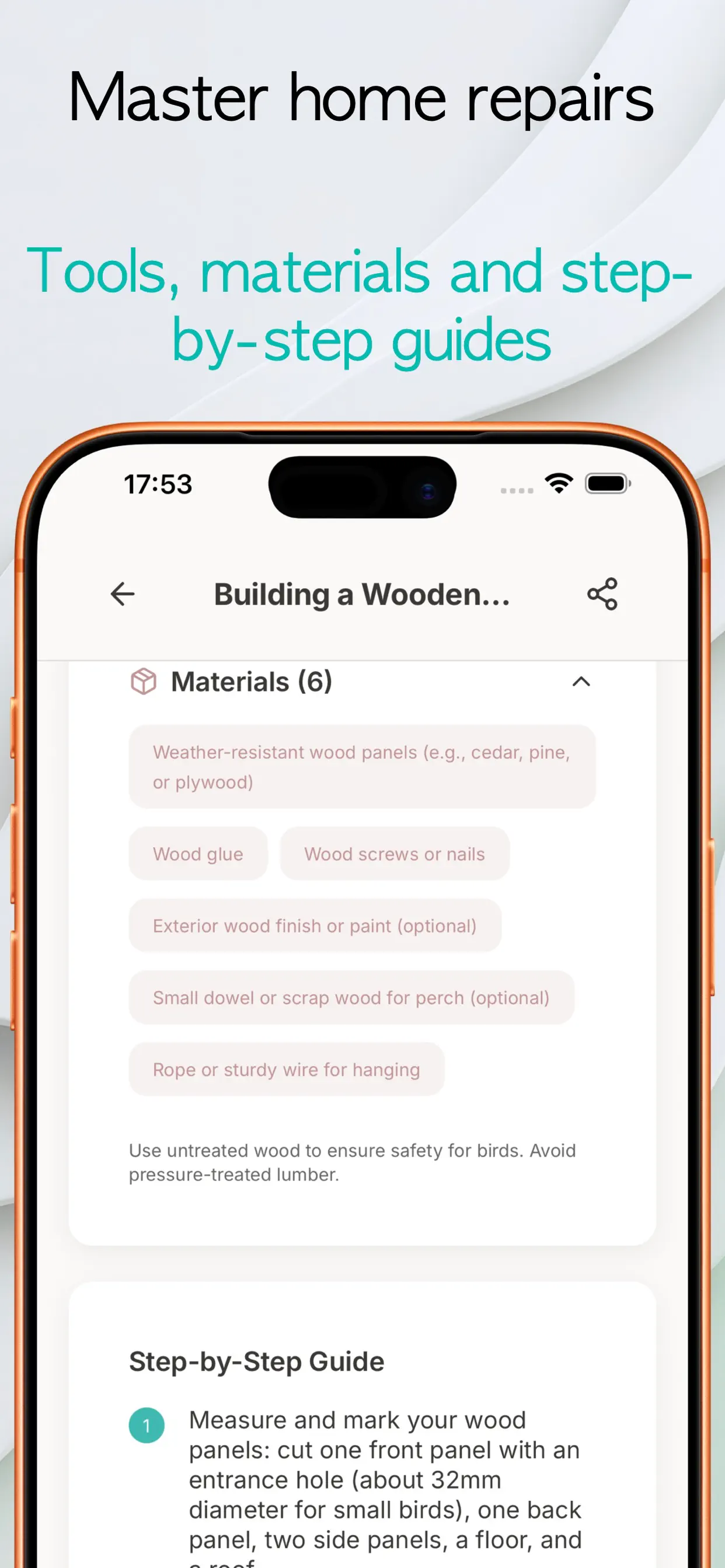
How to estimate a home repair in five steps
Every home repair estimator, from a free online calculator to a contractor's software, works through the same five numbers. Doing them yourself takes ten minutes and tells you whether a quote is fair.
- Name the failure. “Water under the sink” is not priceable; “a worn faucet cartridge” is. The diagnosis decides everything that follows.
- Price the materials. List every part, then check a hardware store's site for current prices.
- Price the tools you do not own. Rent or borrow anything you will not use again.
- Price the labor. Your realistic hours for DIY, or the pro's rate. Handymen charge about $50 to $125 an hour nationally (Taskrabbit cost guide, November 2026), and licensed trades such as plumbers and electricians usually charge more.
- Add a buffer. 10 to 15% for a simple, visible repair; closer to 20% when the work opens a wall, a floor, or an older home.
Then compare the DIY total against the pro total. The gap is the money you save by doing it yourself, and the next sections show when that gap is worth it.
Typical costs for common repairs
US ballpark figures, materials versus hiring out:
| Repair | DIY materials | Typical pro cost |
|---|---|---|
| Leaky faucet (cartridge/washer) | $10 to $40 | $150 to $350 |
| Drywall crack or small hole | $15 to $30 | $150 to $400 |
| Running toilet (flapper/fill valve) | $10 to $30 | $130 to $300 |
| Caulk tub or shower | $10 to $20 | $120 to $250 |
| Interior door adjustment | $0 to $20 | $100 to $250 |
| Gutter section repair | $20 to $60 | $150 to $500 |
The pattern is consistent: for small repairs, labor is 80 to 90% of the professional price. That is the money DIY captures.
Two things move the pro price more than the repair itself. Many pros charge a minimum visit, so a ten-minute fix can cost the same as an hour's work; batch small jobs into one visit. And prices vary by region, so treat national figures as a range and your local quotes as the real number.
Types of home repair estimators compared
“Home repair estimator” covers four quite different tools. Pick the one that matches what you know about the problem:
| Estimator | What you give it | What you get | Best for |
|---|---|---|---|
| Online cost calculator | Repair type, area, rates you enter | A national-average or formula-based total | Rough budgets when you already know the job |
| Inspection-report estimator | A home inspection PDF | A priced list of every repair in the report, often by ZIP code | Buyers and sellers negotiating after an inspection |
| Contractor quote | A site visit | A binding or near-binding price for your job | Anything risky, large, or permitted |
| Photo-based estimator (NestBit) | A photo of the problem | A diagnosis, materials and tools list with prices, difficulty, and time | Single repairs where you do not yet know what is wrong |
Calculators and inspection-report tools assume you already know the repair. A photo-based estimate starts one step earlier, at the diagnosis, which is where most bad estimates go wrong.
The DIY-or-hire math
Estimate three numbers: materials cost, your realistic hours, and the pro quote. DIY wins clearly when materials are cheap, the difficulty is low, and a mistake is cosmetic. Hire out when the downside involves water damage, gas, mains electricity, structure, or heights, or when tool purchases would eat the savings.
A worked example: a running toilet needs a $10 to $30 flapper or fill valve and about an hour of your time. A plumber charges $130 to $300 for the same job. Unless your hour is worth more than that gap, it is a clear DIY win, and the worst case is a wet floor you can see right away.
Watch for the tool trap: a repair with $20 of materials that requires a $180 specialty tool is a $200 repair unless you will use that tool again.
Add a contingency buffer
Repairs grow once you open them up: rotten subfloor under the leaking toilet, a corroded shutoff valve that will not close. A buffer keeps those surprises from blowing the budget.
- 10 to 15% for small, visible repairs where you can see the whole problem.
- About 20% when the work goes behind walls or under floors, or the house is old. Real estate investors use the same idea: one widely read BiggerPockets guide multiplies every repair estimate by 1.2 before making an offer.
If the buffer goes unused, it becomes next year's repair fund.
What a good contractor estimate includes
When the math says hire out, get at least three written quotes and compare them line by line. A quote worth trusting lists:
- Scope: exactly what will be repaired, and what will not.
- Materials: itemized, with brands or grades where they matter.
- Labor: hours or a fixed price for the job.
- Permits, disposal, and cleanup, if the job needs them.
- Timeline and payment schedule: avoid paying most of the price up front.
- Warranty on the work, in writing.
Your own five-step estimate is the yardstick. If one quote is far above the others, ask which line explains the difference.
Budget for repairs you have not found yet
Single estimates handle today's problem. For the ones coming, a common rule of thumb is to set aside 1 to 4% of your home's value every year, or about $1 per square foot (Bob Vila, 2023). Newer homes sit at the low end; older homes, and homes in wet climates, sit at the high end.
Keeping a record of what you fixed, when, and what it cost makes the next estimate faster. That is why NestBit saves each repair project as part of your home's maintenance history.
Why photo-based estimates beat generic calculators
Online cost calculators quote national averages for a generic problem. A photo-based estimate prices your problem: the AI sees the faucet type, the crack size, or the extent of the damage, and builds the materials list for that specific fix. That is the difference between “drywall repair costs $150 to $400” and “your crack needs mesh tape, a small tub of compound, and an afternoon.”
Estimate your repair with NestBit
- Photograph the problem in a Fix & Repair project.
- Read the generated cost breakdown: materials, tools, difficulty, and time.
- Compare against a pro quote if the difficulty rating suggests one. Either way, you now negotiate and decide with numbers.
Try it on your own home
NestBit is free to download on iPhone. Your first 2 projects, design or repair, are free.
Download NestBit FreeFree download. No credit card required.
Frequently asked questions
How do I estimate home repair costs?
Name the failure, price the materials and any tools you lack, price the labor (your hours, or a pro at roughly $50 to $125 an hour for a handyman in 2026), add a 10 to 20% buffer, and compare the DIY total with a pro quote.
Is there a free home repair estimator?
Yes. Online cost calculators are free but quote averages for a repair you have to name yourself. NestBit is free to download with 2 free projects, and estimates from a photo of the problem, diagnosis included.
Are the app's cost estimates accurate?
They are grounded in typical US retail prices for the generated materials list. Local prices vary, so treat them as a solid planning range, not a contractor quote.
Does the estimate include labor?
DIY plans price materials and tools and give a time estimate. That time estimate is what you compare against a pro's labor charge.
How much contingency should I add to a repair estimate?
10 to 15% for small, visible repairs, and about 20% when the work opens walls or floors or the house is old. Hidden damage is the usual reason repairs cost more than planned.
Do home inspectors give repair cost estimates?
Usually not. The ASHI Standard of Practice does not require inspectors to determine the cost of corrections, so buyers often use an inspection-report estimator or contractor quotes to price the findings.
Can it estimate big renovations?
It is built for repairs and room-level projects. For structural renovations, use it to scope and visualize, then get professional quotes.